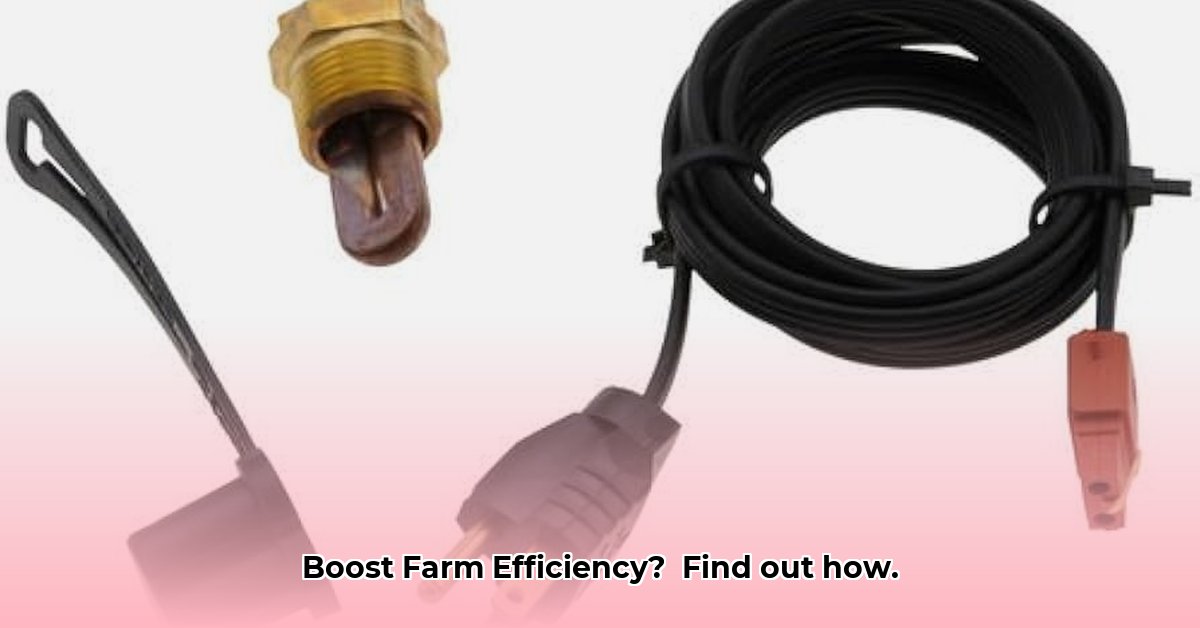
Cold weather significantly impacts farm productivity. A delayed start due to freezing temperatures translates to lost time and revenue. John Deere tractor block heaters offer a solution, pre-warming the engine to ensure reliable starts even in sub-zero conditions. But what are the true costs and benefits, and how can we use these heaters sustainably? For optimal tractor performance, consider appropriate tires.
Understanding John Deere Tractor Block Heaters
John Deere offers block heaters, like the AT310787 model, designed for specific tractor models (e.g., 350D, 400D series). These heaters pre-heat the engine's coolant, reducing wear and tear during cold starts. This minimizes the strain on vital engine components, extending the lifespan of your valuable equipment. Reduced downtime directly translates to increased productivity and higher profitability. But is this convenience truly cost-effective and environmentally responsible?
Energy Use and Environmental Impact
While the benefits are substantial, a block heater's energy consumption requires careful consideration. Currently, precise energy usage data for John Deere block heaters is limited. Further research is needed to fully quantify electricity consumption, manufacturing impact, and end-of-life disposal effects. This comprehensive data is critical for comparing block heaters against alternative cold-start solutions, such as engine covers or innovative heating technologies. Ultimately, we need a complete picture of their environmental footprint.
Key Considerations: Do you really need a block heater, given your climate and usage frequency? Is the benefit of preventing cold-start damage and ensuring operational readiness worth the additional energy expenditure? This requires a thorough cost-benefit assessment.
Weighing the Costs and Benefits: Is a Block Heater Right for You?
Advantages:
- Reduced Engine Wear: Extends engine lifespan, minimizing costly repairs.
- Reliable Cold Starts: Ensures dependable operation even in extreme cold.
- Improved Productivity: Maximizes operational time, leading to higher yields.
- Potential Cost Savings: Reduced repair costs can outweigh the electricity expense, depending on usage and climate.
Disadvantages:
- Electricity Costs: Adds to your energy bill.
- Environmental Impact: Contributes to greenhouse gas emissions. More research is needed to determine the precise magnitude.
- Upfront Investment: Purchase and installation costs should be factored in.
The decision to use a block heater hinges on several factors: climate severity, tractor usage frequency, electricity prices, and the cost of downtime. A detailed cost-benefit analysis comparing electricity expenses to potential savings from reduced repairs and increased productivity is essential.
Steps to Sustainable Block Heater Use
- Needs Assessment: Honestly evaluate your climate and operational needs. A block heater might be unnecessary in milder climates or with infrequent winter use.
- Cost-Benefit Analysis: Carefully calculate expected electricity costs versus savings from avoiding repairs and maximizing operational hours.
- Alternative Exploration: Consider alternatives like engine covers or innovative heating methods, comparing their cost and environmental impact.
- Data Advocacy: Encourage John Deere and other manufacturers to provide thorough data on the energy consumption and environmental profile of their block heaters.
The Future of Sustainable Farm Technology
Sustainable agriculture demands efficient practices that minimize environmental impact. While block heaters can enhance productivity, further research is essential to understand and mitigate their environmental footprint. This requires detailed energy usage data, investigation into more efficient heating technologies, and exploring the use of renewable energy sources to power these heaters. The future of responsible farming hinges on integrating efficiency and environmental stewardship.
How to Reduce the Environmental Impact of Engine Block Heaters in Sustainable Agriculture
Key Takeaway: Smart technology and responsible usage can minimize the environmental impact of engine block heaters. Automatic controllers, offering substantial energy savings, are critical to sustainable operation.
Smart Technology: Optimizing Energy Efficiency
Traditional block heaters operate continuously. Automatic controllers, however, use temperature sensors to activate heating only when needed. This “smart” approach drastically reduces energy consumption.
Choosing the Right Controller
Select a controller with accurate temperature sensors, timers, and programmable settings for customized heating schedules. Some offer smart home integration for remote monitoring and control. These features are crucial for maximizing energy efficiency.
Optimizing Energy Use
- Avoid unnecessary heating: Rely on the controller's automated functions and avoid manual overrides.
- Climate considerations: Adjust heating duration to match your specific climate; shorter periods may suffice in milder conditions.
- Regular Maintenance: Ensure the controller functions optimally; a malfunctioning sensor or timer negates energy-saving benefits.
The Broader Perspective: Sustainable Agricultural Practices
Efficient cold-start management is only one element of broader sustainability. Other essential factors include fuel-efficient tractors, optimized operation, and exploration of renewable energy options to power block heaters (e.g., solar). Precision farming techniques further contribute to minimizing overall environmental impact.
Long-Term Sustainability
Investing in automatic controllers delivers long-term benefits through reduced energy use and emissions. It signifies a commitment to both operational efficiency and environmental responsibility. Embracing such technologies is vital for the long-term health of agriculture and the planet.